
Table of Contents
Toggle10 Eye-Opening Signs the US Housing Market Is Facing a Short-Term Oversupply
Introduction
The US housing market is showing signs of a short-term oversupply—something that hasn’t been seen in years. While long-term fundamentals remain strong, certain regional trends and building practices have created a short-term glut of homes, particularly in the Sun Belt. This development was recently highlighted by Toll Brothers CEO Douglas Yearley during the Bank of America 2025 Housing Symposium. In this article, we break down the 10 key signs pointing toward this temporary housing market imbalance.
1. A Sluggish Spring Selling Season
Douglas Yearley, CEO of Toll Brothers, an $11 billion luxury homebuilder, described the 2025 spring selling season as “soft.” February was the low point, with minor improvements in March and April. Typically, spring—starting as early as February—is the prime selling season for new homes in the US. This year’s lackluster performance has raised eyebrows across the industry.
2. Bifurcated Regional Trends
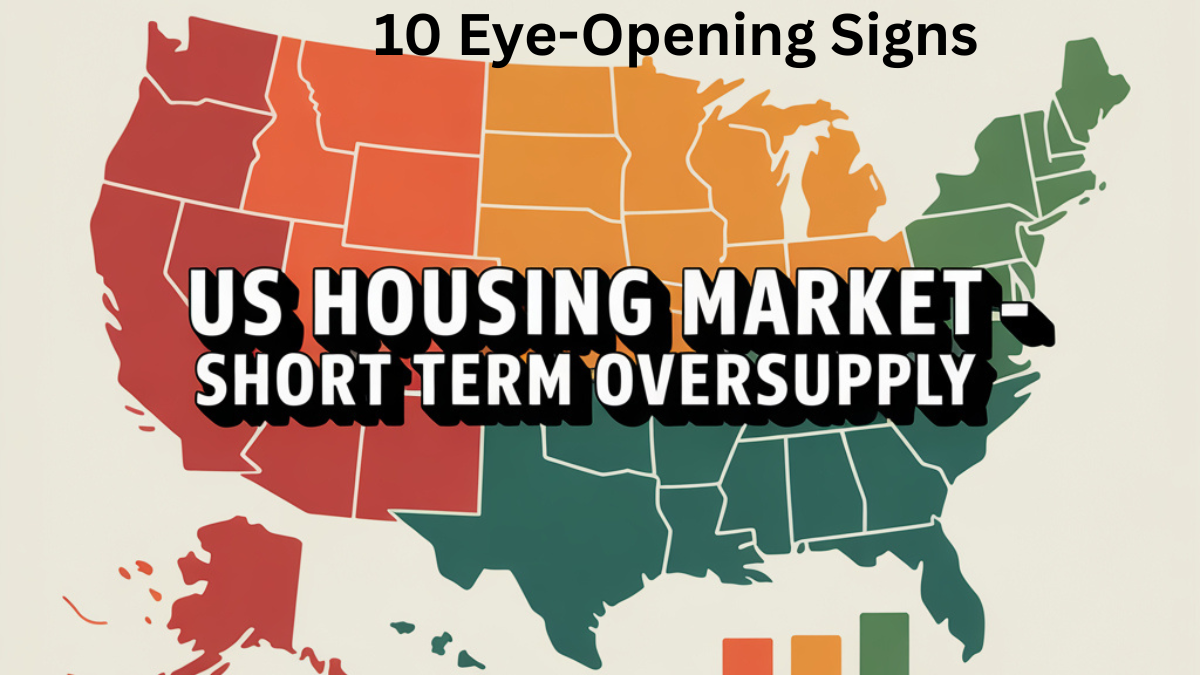
The housing market is far from uniform. While regions like Boston and Northern Virginia are thriving due to limited land and tight resale inventory, boomtowns like Phoenix, Florida, and parts of Texas are facing growing unsold inventories.
“There’s no inventory [in the Northeast],” Yearley noted. “But in Texas and Florida, there’s much more supply.”
3. Rising Spec Home Inventory in Sun Belt Markets
Spec homes—built without a committed buyer—have surged in cities like Phoenix, Tampa, and Austin. In many Sun Belt metros, as much as one-third of resale market inventory is made up of new, unsold spec homes. Builders had bet big on continued pandemic-era migration, and many now face unsold inventory.
4. Builders Pulling Back on New Starts
The good news is that many homebuilders, including Toll Brothers, are responding by cutting back on speculative construction. This self-correction is expected to gradually resolve the overhang in oversupplied markets.
5. Overly Ambitious Pandemic Building Plans
During the COVID-19 pandemic, many builders overestimated long-term migration trends. As work-from-home flexibility wanes and interest rates rise, demand has cooled—especially in high-growth regions that saw explosive price gains in 2021 and 2022.
6. Housing Inventory in Key Metros is Surging
According to Realtor.com and Redfin data, cities like Tampa, Austin, and Phoenix have seen inventory levels rise sharply over the last six months. For example, Tampa’s active listings rose 28% year-over-year, with median days on market now exceeding 50.
7. Buyer Cancellations Are Up
Redfin and MarketWatch have reported a noticeable uptick in buyer cancellations across new home contracts. This suggests that potential homeowners are becoming wary of overpaying in a cooling market or are waiting for better rates and prices.
8. Long-Term Housing Shortage Still Exists
Despite current oversupply pockets, the US still faces a long-term housing shortage of 4–6 million homes. Builders simply haven’t built enough homes over the past 15 years to meet demand from millennials, Gen Z, and immigration-driven growth.
9. Tight Lending Conditions for Builders
Bank lending conditions have tightened in 2025, especially for smaller or mid-tier developers. As a result, fewer new permits are being issued, which should help slow down the pipeline and stabilize inventory levels.
10. Real Estate Investors Are Pausing
Institutional buyers and real estate investment trusts (REITs) are pumping the brakes. With higher borrowing costs and volatile cap rates, they are waiting for more clarity before re-entering high-inventory markets like Florida and Arizona.
Conclusion: A Market Reset, Not a Crash
The signs of a short-term housing oversupply are real—but they don’t point to a 2008-style collapse. Instead, we’re seeing a regional reset. In high-demand, low-inventory metros like Boston and Northern Virginia, sellers remain in control. In oversupplied markets, buyers have more power and may find better deals in the coming months. The fundamentals—like household formation, job growth, and millennial demand—are still positive. As builders adjust and spec home inventory is absorbed, the market will likely stabilize into 2026.
Disclaimer: This article is for informational purposes only. It does not constitute financial or investment advice. Always consult with a licensed real estate or financial advisor before making major decisions.
0 Comments